After you have made it home from a multi-car collision in Florida, your priorities must shift immediately to protecting your health and your legal rights. The first steps involve securing medical documentation within 14 days to preserve your insurance benefits, formally notifying your own insurer of the accident, and beginning the process of defending yourself against the finger-pointing that is almost certain to occur in a pileup.
Unlike a simple fender-bender between two drivers, a multi-vehicle accident creates a chaotic environment of competing stories and interests. Insurance companies for every other driver involved will be looking for reasons to shift as much blame as possible onto you. Through careful analysis of forensic evidence and professional accident reconstruction, our role as car accident lawyers is to figure out the true sequence of events to ensure you are not unjustly blamed.
If you are already feeling pressured by multiple insurance adjusters or are simply unsure of who is truly at fault, we have years of experience handling these types of cases and can provide clarity.
Call Holliday Karatinos Law Firm today for a free consultation. There is no pressure and no obligation to work with us.
Key Takeaways for Multi-Car Collision Claims
- You have only 14 days to see a doctor to use your PIP benefits. Missing this deadline means you forfeit your right to $10,000 in coverage, even for injuries that appear later.
- If you are found 51% or more at fault, you cannot recover injury compensation. Insurance companies for other drivers will try to shift blame onto you to avoid paying.
- The deadline to file a personal injury lawsuit is now only two years. You must act quickly to preserve your legal rights, as complicated investigations take time.
The 14-Day Rule and Managing Delayed Injuries
In the hours and days after a car crash, adrenaline is a powerful anesthetic. It may mask serious injuries, making you feel fine or just a little sore now that you are back in the relative quiet of your home.
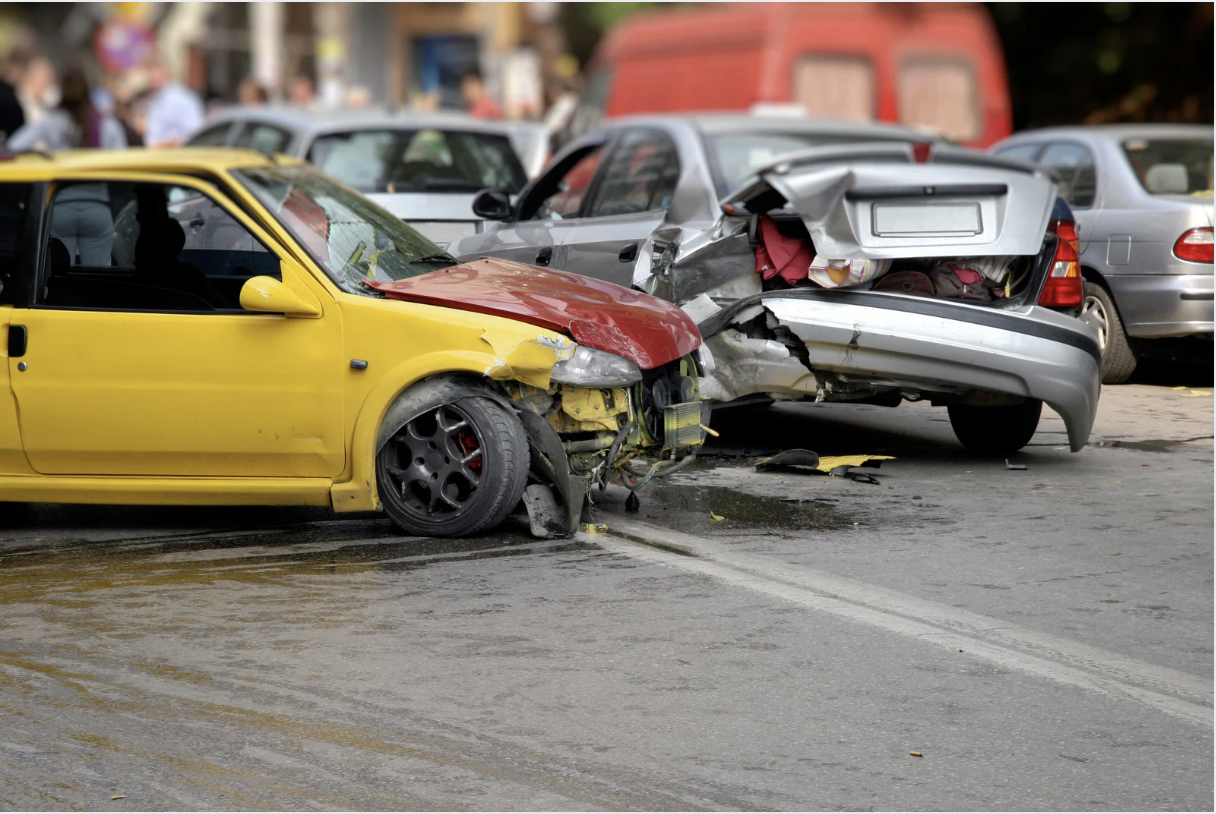
Under Florida Statutes § 627.736, you have only 14 days from the date of the collision to seek initial medical care. If you miss this two-week window, you automatically forfeit your right to use your $10,000 in Personal Injury Protection (PIP) coverage. It doesn't matter how severe your injuries turn out to be; if you wait until day 15, your own insurance company is legally barred from paying those initial medical bills.
This is particularly hazardous in multi-car pileups, where injuries like whiplash, spinal misalignments, and other soft tissue damage typically have a delayed onset. You might go to bed with minor stiffness and wake up a few days later with debilitating neck pain and splitting headaches.
For this reason, always see a doctor immediately. Do not wait for the pain to become unbearable. An urgent care center, hospital emergency room, or a medical clinic that handles auto accident cases are your best options.
- Important note: When you see the provider, be very clear that your symptoms are the result of the car accident. Medical records must create a link between the collision and your injuries to stand up to the scrutiny of multiple insurance adjusters who are looking for any reason to deny or downplay your claim.
Navigating the Insurance Finger-Pointing Game
Even a two-car crash can sometimes devolve into a he-said, she-said dispute. A multi-car pileup is an entirely different beast. It becomes a blame game where every driver's insurance company has an incentive to shift liability to everyone else involved. For you, this means you are not just dealing with one adjuster, but potentially several, each with their own agenda.
Florida’s No-Fault law requires your own PIP coverage to pay the first $10,000 of your medical bills, regardless of who caused the accident. However, the costs associated with injuries from a multi-car collision easily burn through this limit. To recover any costs beyond your PIP coverage, you must file a claim against the at-fault driver's Bodily Injury (BI) insurance policy.
The other insurers may try to dilute their financial responsibility by arguing that you share a percentage of the fault. Because Florida law bars recovery if your fault is determined to be 51% or more, even a small, unsubstantiated assignment of blame could be financially devastating. They might concede their driver was 80% at fault but argue you were 20% at fault for following too closely, thereby reducing what they have to pay by that amount.
What Steps Should You Take With Insurers?
Your first obligation is to notify your own insurance company of the accident, typically within 24 to 72 hours, as specified in your policy. When you speak to them, stick to the bare facts of the incident: where it happened, when it happened, and what vehicles were involved. Avoid speculating on fault or giving excessive detail about your injuries before you have been fully evaluated by a doctor.
Do not give a recorded statement to any of the other drivers' insurance companies without first consulting with a lawyer. Their adjusters are trained to ask leading questions designed to elicit responses they could use to shift blame.
How Fault Works in Florida Chain-Reaction Crashes
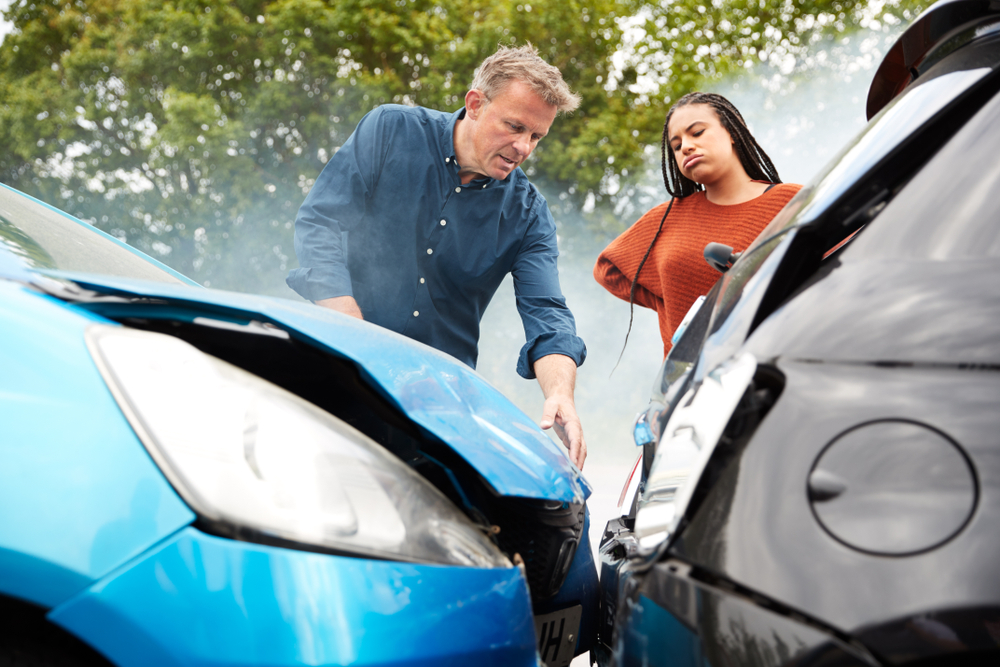
Many people assume that in any rear-end collision, the driver in the back is automatically at fault. While this is a common presumption, it is not an absolute rule, especially in multi-car pileups.
If you were stopped safely behind another vehicle but were then struck from behind and pushed into the car in front of you, the liability typically rests with the driver who initiated the chain reaction, not you.
The Chain of Causation
The central legal question in these cases is one of causation. We must establish who triggered the first impact and whose subsequent actions, or failures to act, contributed to the widening scope of the crash. Did a driver make a sudden, unexpected lane change without signaling, causing the car behind them to slam on their brakes and get rear-ended? Or did the second driver simply fail to maintain a safe following distance, making them unable to stop in time?
In some situations, the Sudden Emergency doctrine might apply. This legal concept may be used as a defense when a driver is faced with an unforeseen hazard that was not of their own making, such as a large piece of debris suddenly appearing on I-95, forcing an immediate and unavoidable stop. Proving this requires showing the driver did not create the emergency and acted as a reasonably prudent person would under the circumstances.
Evidence to Gather From Home
Here is a checklist of actionable steps you can take from home:
- Request the Police Report: The official crash report, usually filed by the Florida Highway Patrol or a local police department, is a foundational piece of evidence. You can typically request a copy online through the Florida Crash Portal. Once you receive it, review it carefully for any errors in the narrative or diagrams. If you believe the reporting officer incorrectly listed you as a contributing cause, a personal injury lawyer may be able to petition to have the report amended.
- Preserve Your Dashcam Footage: If your vehicle is equipped with a dashcam, download and save the footage to multiple locations immediately. This video is irrefutable proof of what happened. If you do not have one, think about the crash location. If it was on a surface street, were there nearby businesses with surveillance cameras that might have captured the incident?
- Check Social Media: In large, high-profile pileups, it is common for witnesses or other involved parties to post photos and videos to social media platforms. Search for the date and location of your crash on these sites. If you find relevant media, save it immediately, as posts may be deleted.
- Preserve Your Vehicle's Black Box Data: Do not rush to have your car repaired. Your vehicle contains an Electronic Data Recorder (EDR), also called a black box. This device records critical data in the seconds before and during a crash, such as your speed, whether you were braking, and the force of impact. This data helps prove you were driving safely. We will send a Letter of Spoliation to the other parties involved, which is a formal legal demand that they also preserve the EDR data from their vehicles.
Florida Statutes of Limitations You Must Know
The time you have to act legally is running out much faster than you might think. Many people believe they can take their time negotiating with insurance companies, but recent changes to Florida law have significantly shortened the window to protect your rights.
- For Personal Injury: The statute of limitations for filing a car accident lawsuit based on negligence is now only two years from the date of the accident, a reduction from the previous four-year deadline.
- For Property Damage: You still have four years to file a lawsuit related to the damage to your vehicle.
The two-year deadline for your injury claim is the one that presents the most significant challenge. Negotiations with multiple insurance companies in a multi-car collision case may easily drag on as they investigate, assign liability, and make lowball offers. If you are not vigilant, you could find that the two-year deadline has expired while you are still trying to get a fair car accident settlement offer, and at that point, your legal claim is extinguished forever.
FAQ for Multi-Car Accident Claims
What if the pileup was caused by bad weather (fog/rain)?
While bad weather is a factor, it is rarely a valid legal defense. Florida law requires drivers to operate their vehicles in a safe manner appropriate for the current conditions. This means reducing speed and increasing following distance during rain or fog. The driver who failed to adjust for the weather and rear-ended the vehicle in front of them is typically still considered liable.
How does it work if an Uber or Commercial Truck caused the chain reaction?
These cases add another layer of difficulty but may also provide access to more substantial insurance coverage. Commercial trucking companies and rideshare services like Uber are governed by federal regulations and carry large corporate insurance policies. Under a legal doctrine known as vicarious liability, the employer may be held responsible for the negligent actions of its employee driver. This means you might be able to file a claim against both the driver and their company.
Can I claim compensation if I was partially at fault in the chain reaction?
Yes, so long as your percentage of fault is determined to be 50% or less. Under Florida's modified comparative fault rule, your total compensation award will simply be reduced by whatever percentage of fault is assigned to you.
What happens if the at-fault driver’s insurance isn’t enough to cover everyone?
This is a very common problem in multi-car crashes where multiple people are injured. A single driver's Bodily Injury liability limits might be exhausted quickly. In this situation, we would look to see if you carry Uninsured/Underinsured Motorist (UM) coverage on your own auto policy. UM coverage is designed specifically for this scenario and is designed to step in and cover the shortfall.
Do I have to pay my deductible if I wasn't at fault?
Initially, you will likely have to pay your own collision deductible to get your vehicle repairs started promptly. However, our goal is to recover that deductible for you from the at-fault driver’s insurance company as part of the final property damage settlement. This process is called subrogation.
Protect Your Future After a Major Collision
Multi-car collisions are among the most complicated claims to resolve successfully in Florida. The sheer number of parties involved, combined with the state’s strict liability thresholds that can eliminate your right to recovery, creates a challenging environment.

Without professional representation, you are at risk of being assigned an unfair percentage of fault or accepting a settlement offer that comes nowhere near covering your long-term medical needs and financial losses.
Call Holliday Karatinos Law Firm today for a consultation. We handle the difficult investigations, evidence preservation, and insurer negotiations so you can focus on what matters most: healing. Your consultation is completely free, and we are ready to listen to your story.

James Wayne Holliday
James Wayne Holliday has been practicing law since 1995. He has been named as a “Best Attorney” Lifetime Charter Member in Florida, an honor awarded to less than one percent of the nation’s lawyers.
Mr. Holliday has earned a reputation as a relentless trial lawyer because of his outstanding work ethic and thorough preparation of his cases for trial.
Author's Bio


