When you are injured by a driver who was texting, you have the right to claim compensation for your medical bills, lost income, and the pain and suffering caused by their negligence.
In many states, including Florida, texting while driving is a violation of the law. This violation establishes a legal concept called negligence per se, which means the driver's act of texting is, in itself, a breach of their duty to drive safely. This strengthens your claim to compensation.
The immediate challenge, however, is that proving the other driver was texting is rarely straightforward. Police officers at a crash scene seldom have the authority to confiscate a driver's phone, and at-fault drivers almost never admit to being on their device. Through legal tools like preservation letters and subpoenas, a dedicated legal team can secure the digital evidence that law enforcement typically cannot.
At Holliday Karatinos Law Firm, we handle difficult liability cases and know how to secure the digital trail before it is altered or deleted. We are prepared to meticulously build a case that reflects the true cause of your injuries. If you have a question about a potential distracted driving claim, call us today for a free consultation.
Key Takeaways for Texting and Driving Accident Claims
- Proving the other driver was texting is the central challenge. Your car accident attorney must use legal tools like subpoenas for phone records to establish negligence.
- A texting violation strengthens your claim. In Florida, texting while driving is illegal, which may establish negligence per se and simplify proving the other driver's fault.
- Evidence of texting increases potential compensation. Juries and insurers view texting as reckless, which often leads to higher awards for economic, non-economic, and sometimes punitive damages.
The Legal Anatomy of a Texting and Driving Claim
Negligence vs. Negligence Per Se: What’s the Difference?
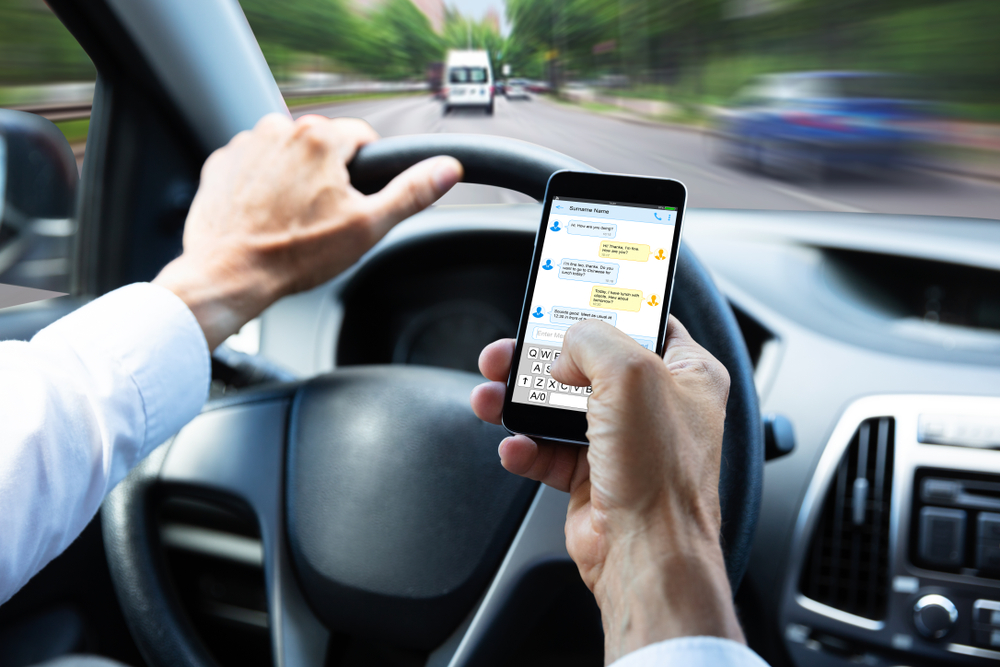
In a standard car accident claim, we must prove the other driver was negligent. This involves showing they failed to act as a reasonably careful person would under similar circumstances. However, when a driver violates a safety law, like Florida's ban on texting while driving, a different standard applies: negligence per se.
This legal doctrine essentially says that the act of breaking the law is, by itself, negligent. Since the statute against texting is designed to prevent distracted driving crashes, proving the driver was texting automatically establishes that they breached their duty of care to you.
Duty of Care and Proximate Cause
Every driver has a legal duty of care to operate their vehicle safely and maintain a proper lookout for hazards. However, proving the driver was texting is not enough and we must also establish proximate cause, which means demonstrating that the act of texting directly led to the crash.
For example, if a driver was texting and ran a red light, we connect the distraction (texting) to the action (running the light) that caused your injuries.
Research shows that even hands-free phone use creates cognitive distraction, a state of inattention blindness where a driver may look at the road but not truly process what they are seeing. If a driver’s mental focus was on a conversation instead of the road, it is still the proximate cause of a collision, regardless of whether their hands were on the wheel.
Beyond the Police Report: How We Prove Distraction
The police report filed after your accident is a starting point, but it is usually incomplete. Officers arriving at a chaotic scene are focused on immediate safety, not a forensic investigation of a driver's phone. Unless the driver admits to it, the report may say nothing about texting.
This gap in the official record allows the other driver's insurance company to frame the incident as a simple he-said, she-said scenario. Their goal is to minimize the role of their insured's distraction, which reduces your compensation or even allows them to argue you were partially at fault. Your recovery should not hinge on the at-fault driver's honesty.
An experienced law firm moves beyond the police report by launching an independent investigation designed to uncover the digital truth. Here is how we build a case:
- Immediate Preservation Letters: The first step is sending a legal notice, called a spoliation letter, to the at-fault driver and their cell phone carrier. This letter demands that they preserve all data from the time of the crash, preventing them from legally deleting incriminating text messages, call logs, or data usage records.
- Subpoenaing Phone Records: Once the data is preserved, we issue a subpoena to obtain the official records from the service provider. These records provide timestamps for every call, text, and instance of data use. By cross-referencing these timestamps with the time of the crash noted in the police report, we create a clear timeline of the driver's activity.
- Analyzing Event Data Recorders (EDR): Modern vehicles are equipped with an event data recorder, or EDR, similar to an airplane's black box. The EDR captures vital information in the moments before a crash, such as vehicle speed, braking inputs, and steering wheel angles. A record showing a complete lack of braking before impact, paired with phone records showing data use at the same second, becomes compelling evidence.
- Investigating Social Media and App Usage: Distraction is no longer limited to texting. Drivers are increasingly scrolling social media, watching videos, or engaging with other apps. Drivers under 25 are especially prone to this behavior. We investigate social media metadata to determine if a driver was posting, liking, or streaming content at the time of the collision.
- Strategic Depositions: A deposition is a formal, under-oath interview of the at-fault driver. Armed with phone records and EDR data, we ask pointed questions designed to expose inconsistencies in their story. When a driver's testimony contradicts the digital evidence, their credibility is seriously damaged.
Damages: How Distraction Impacts Compensation
Cases involving clear evidence of texting and driving typically result in higher compensation than claims based on simple driver error. The compensation you may pursue is divided into several categories of damages.
What Types of Damages Are Available?
- Economic Damages: These are the tangible financial losses you have suffered. They include all your medical bills (past and future), lost wages from being unable to work, and any costs related to future care or rehabilitation. The economic cost of distracted driving crashes in the U.S. is staggering, estimated at over $98 billion annually, reflecting the severe financial strain these incidents place on victims.
- Non-Economic Damages: These damages are intended to compensate you for the intangible, human costs of the accident. This includes physical pain, emotional distress, and the loss of enjoyment of life. For example, if your injuries prevent you from participating in hobbies or activities you once loved, you are entitled to compensation for that loss.
Are Punitive Damages Awarded in These Cases?

In some cases, the at-fault driver's behavior is so reckless that the law provides for an additional category of compensation: punitive damages. These are not designed to compensate you for a loss, but to punish the wrongdoer and deter similar behavior in the future.
Under Florida Statute § 768.72, punitive damages may be awarded if there is clear and convincing evidence of intentional misconduct or gross negligence. Gross negligence is defined as conduct so reckless it constitutes a "conscious disregard or indifference to the life, safety, or rights of persons." This is a high bar to meet, so courts will rarely award them.
Defenses and Obstacles: Comparative Negligence
Even with strong evidence of texting, the other driver's insurance company will conduct its own investigation. One common strategy they employ is to look for any evidence, however small, that you might share some of the blame for the car accident. This legal concept is known as comparative negligence.
Florida operates under a modified comparative negligence system. This means if you are found to be partially at fault, your final compensation award will be reduced by your percentage of fault. If you are found to be more than 50% responsible, you are barred from recovering any compensation at all.
How Does the Insurance Company Use This?
Imagine you were driving five miles per hour over the speed limit when a texting driver ran a stop sign and T-boned your car. The insurance adjuster might try to argue that your speed contributed to the accident and assign you 20% of the fault. Their goal is to shift the focus away from their insured’s negligence (texting) and onto your minor infraction (slight speeding).
Our role is to ensure that the adjuster (or a court, if it gets to that) sees the entire picture. In the example above, we might use the evidence of their driver’s total lack of reaction, as shown by the EDR data, to argue that their distraction was the dominant and overriding cause of the car crash. We would work to demonstrate that even if you had been driving at the exact speed limit, the accident would have been unavoidable due to the other driver's complete inattention, ensuring the blame is placed where it rightfully belongs.
Commercial and Rideshare Liability (Vicarious Liability)
When the distracted driver is on the clock, whether for a delivery service, a trucking company, or a rideshare app like Uber or Lyft, the case becomes more complicated. The legal doctrine of respondeat superior, or vicarious liability, may come into play. In simple terms, this principle holds an employer responsible for the negligent actions of an employee performed within the scope of their employment.
Federal regulations from the Federal Motor Carrier Safety Administration (FMCSA) strictly prohibit commercial drivers from using handheld mobile devices while operating their vehicles. A violation of these federal rules not only establishes the driver's negligence but may also expose their employer to liability.
This is significant because commercial vehicles and their employers carry much higher insurance policy limits than private individuals. If a delivery driver caused your accident while checking their route on a company-issued device, you may have a claim against both the driver and the corporate entity that employs them.
FAQ: Common Questions on Distracted Driving Claims
What if the driver deleted their texts right after the crash?
Deleting evidence after an accident is known as spoliation of evidence. If a driver intentionally deletes texts or other phone data, the court issues severe penalties. A judge may instruct the jury to assume that the deleted evidence was unfavorable to the at-fault driver.
Furthermore, even if texts are deleted from the handset, the records preserved by the cell phone carrier will still show the timestamps of sent and received messages.
Will the insurance company tell me if their driver admitted to texting?
No. An admission of texting is incredibly damaging to their case, and they have no obligation to volunteer this information. The insurance company's role is to protect their client and their own financial interests. The only way to compel the release of this information is through the formal discovery process, which includes depositions and subpoenas handled by your legal team.
How does a texting ticket affect my injury claim?
A ticket is helpful evidence that strengthens a claim for negligence per se, but it is not required to win your case. Many texting drivers are not ticketed. The success of your civil claim for compensation depends on the evidence gathered during our investigation, such as phone records, EDR data, and deposition testimony, not on whether the police issued a citation.
What if something other than texting distracted the driver?
Distraction takes many forms beyond texting. A driver may eat, apply makeup, use a GPS, or talk to passengers.
Florida law defines distracted driving broadly as any activity that diverts attention from the primary task of driving.
While Florida’s negligence per se law specifically addresses texting, a knowledgeable legal team successfully establishes negligence in all distracted driving cases by proving the driver failed their duty of care. For instance, we use cognitive distraction evidence to demonstrate a driver’s inattention, even if their hands remained on the wheel.
How long do I have to file a distracted driving claim in Florida?
Florida law sets a specific deadline, known as the statute of limitations, for filing car accident lawsuits. A person must generally file a lawsuit within two years from the date of the accident. If you miss this crucial deadline, a court will most likely bar you from recovering any compensation, regardless of the strength of your evidence.
Because evidence degrades and memories fade over time, contact a personal injury lawyer as soon as possible after a collision to protect your claim.
Take Control of Your Recovery
The decision to send a text behind the wheel is a choice, not an accident. When that choice harms your health and financial stability, you deserve a recovery process that digs for the truth.
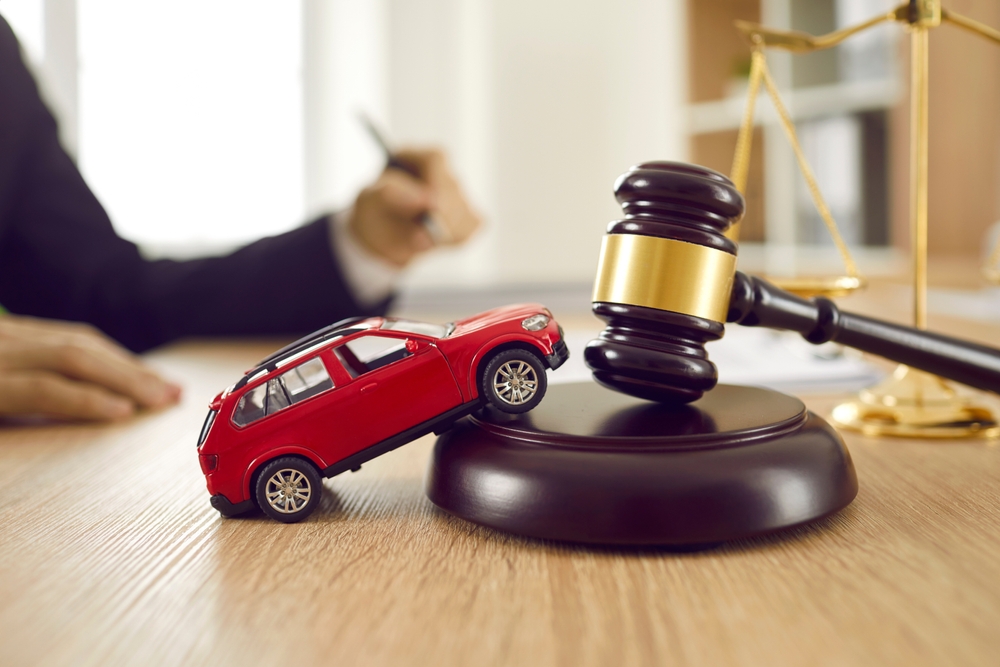
You may worry that it is your word against theirs. We have the resources and experience to change that dynamic. By securing the digital evidence, we build a case based on objective facts, not on the other driver's version of events.
Let us review the details of your case and help you determine the next right step. Call Holliday Karatinos Law Firm today to begin.

James Wayne Holliday
James Wayne Holliday has been practicing law since 1995. He has been named as a “Best Attorney” Lifetime Charter Member in Florida, an honor awarded to less than one percent of the nation’s lawyers.
Mr. Holliday has earned a reputation as a relentless trial lawyer because of his outstanding work ethic and thorough preparation of his cases for trial.
Author's Bio


